
01

Orthognathic surgery in Bogotá and Cali

Surgical treatment of jaw position disorders that affect the bite, oral function and facial harmony.

Orthognathic surgery planning

What orthognathic surgery is

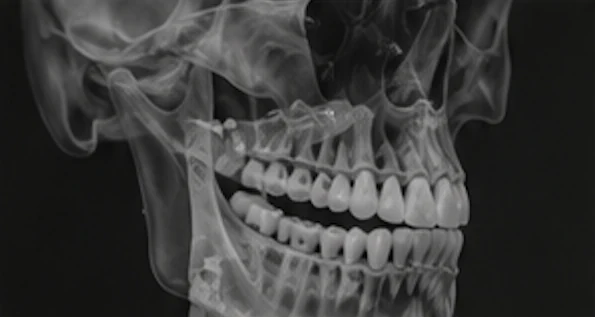
Orthognathic surgery is the surgical treatment of certain disorders in the position, size or relationship between the upper jaw and the mandible. It is considered when a skeletal discrepancy exists that orthodontics alone cannot adequately correct.

The aim is not simply to change appearance: it is to establish a sound anatomical and occlusal relationship while achieving a balanced facial result that remains stable over time.

Conditions it addresses

  • Mandibular prognathism and retrognathia.
  • Excessive or deficient development of the upper jaw.
  • Open bite or crossbite of skeletal origin.
  • Facial asymmetries and other dentofacial deformities.

When an assessment may be advisable

An assessment may be reasonable when the bite does not fit despite orthodontic treatment, when chewing is difficult or the lips cannot be closed without effort, or when the patient perceives a facial disproportion related to the position of the jaws.

An assessment does not mean surgery is indicated: its purpose is to determine which part of the problem lies in the teeth and which in the facial skeleton, and which treatment options are reasonable in each case.

Diagnosis and assessment

Diagnosis is based on clinical facial and occlusal examination, photographic records, study of the dentition through models or intraoral scanning, and imaging, usually cone beam computed tomography (CBCT).

This analysis makes it possible to distinguish the dental component from the skeletal one and to estimate the real limits of orthodontic compensation.

Treatment planning

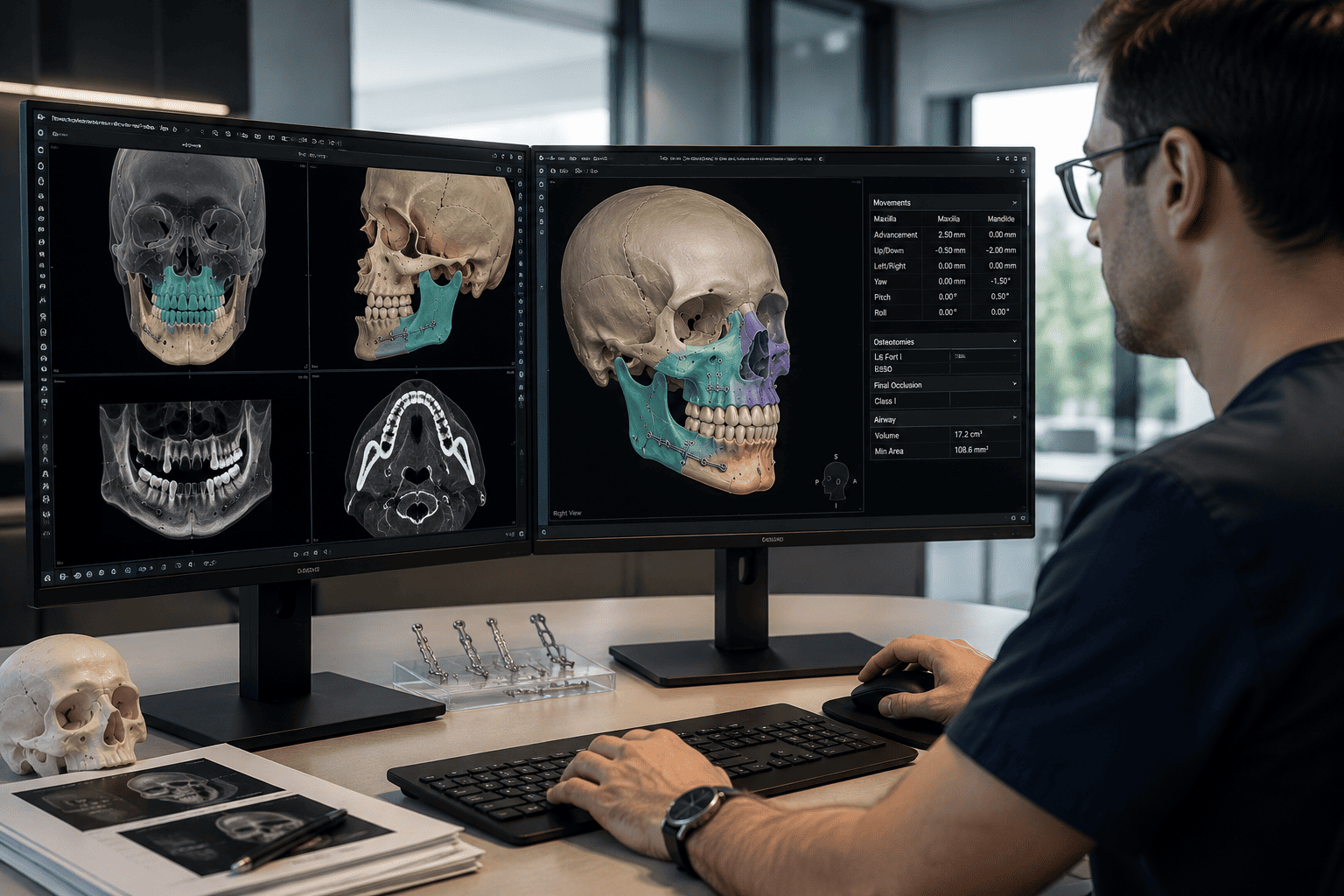
When surgery is indicated, it is planned jointly with the orthodontist. Three-dimensional virtual planning allows the intended bone movements to be simulated and surgical guides or splints to be prepared.

Depending on where the deformity lies, treatment may involve single-jaw surgery or bimaxillary surgery, with or without an associated genioplasty.

Recovery and follow-up

The early postoperative period usually involves swelling and progressive adaptation of the bite, with a modified diet during the first weeks. Timeframes vary according to the procedure and the characteristics of each patient.

Orthodontic treatment continues after surgery until the occlusion is finally detailed, and follow-up is maintained over the long term to assess the stability of the result.

Considerations and limitations

As with any surgical procedure, orthognathic surgery carries risks that must be explained and assessed individually, including temporary or, less frequently, persistent changes in sensation. Results depend on the diagnosis, on each patient's anatomy and on adherence to the combined orthodontic and surgical plan.

Frequently asked questions

See all frequently asked questions

Related articles

Related clinical cases

Orthognathic surgery

A life-changing transformation

Bimaxillary orthognathic surgery with advancement genioplasty and 8 years of follow-up: function, stability and facial harmony.

View clinical case

I am here to help

Your wellbeing begins with a conversation.