
02

Complex oral implantology and bone reconstruction

Implant rehabilitation for patients with bone loss, jaw atrophy or conditions that make conventional treatment difficult.

Oral implantology and bone reconstruction

What advanced oral implantology covers

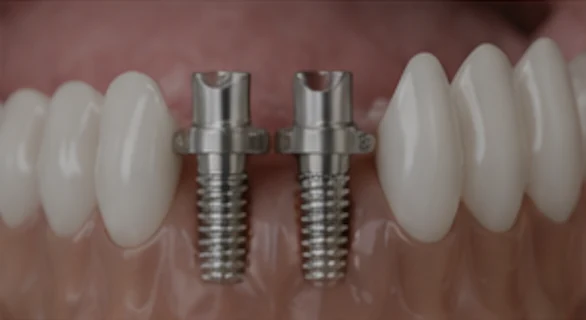
A dental implant replaces the root of a lost tooth and requires sufficient bone volume and quality to integrate stably. When that support is absent, treatment is no longer a standard procedure and calls for specific surgical planning.

Complex implantology deals precisely with those situations: jaw atrophy, bone loss following extractions or infection, and the sequelae of trauma or previous surgery.
Frequently assessed situations

  • Bone resorption after prolonged tooth loss.
  • Insufficient bone height in the posterior upper jaw.
  • Localised bone defects caused by infection, cysts or complex extractions.
  • Previous implant failure or unstable rehabilitations.

Diagnosis and assessment

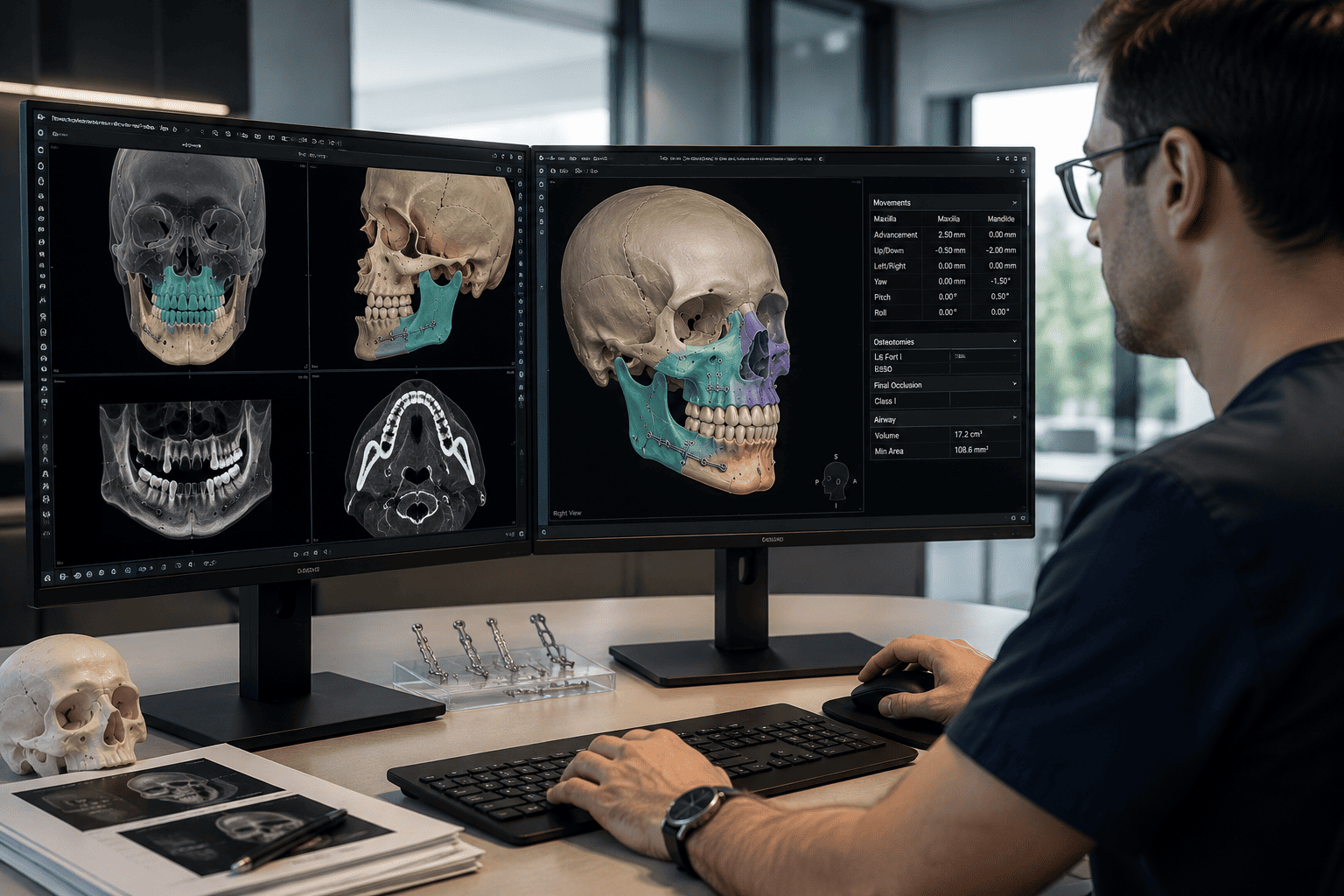
Assessment includes clinical examination, evaluation of the occlusion and soft tissues, and a CBCT scan that allows the available bone to be measured in three dimensions and relevant anatomical structures, such as the maxillary sinus or the inferior alveolar nerve, to be located.

Medical history, habits and any factors that may influence healing are also reviewed.

Options for prior reconstruction

When the available bone is insufficient, different options exist depending on the type and extent of the defect: guided bone regeneration, bone grafts of various origins, or maxillary sinus floor elevation.

The choice depends on the specific defect, the area to be rehabilitated and the planned prosthetic outcome. In some cases reconstruction and implant placement can be carried out in the same surgical procedure; in others it is preferable to stage them.

Planning and guided surgery

Digital planning makes it possible to define the position of each implant according to the planned prosthesis and not solely to the remaining bone. Surgical guides can then be produced to transfer that planned position to the operating room.

Follow-up

After surgery, healing and osseointegration times are respected before the prosthetic phase. Subsequent maintenance, with appropriate hygiene and regular check-ups, is decisive for long-term stability.

Timeframes and outcomes depend on the type of reconstruction performed and on each patient's individual conditions.

Frequently asked questions

See all frequently asked questions

Related articles

I am here to help

Your wellbeing begins with a conversation.