03

Facial trauma surgery: facial and jaw fractures

Diagnosis and treatment of fractures and injuries of the facial bones and jaws, with the aim of restoring function and anatomy.

Facial trauma surgery and maxillofacial fractures

What maxillofacial trauma surgery is

Facial trauma surgery deals with injuries to the bones and tissues of the face caused by accidents, falls, sport or assault. The facial skeleton protects sensitive structures and supports essential functions such as chewing, breathing, vision and speech.

Treatment aims to restore the anatomy and the occlusion the patient had before the injury and, with them, function.

Injuries treated

  • Mandibular and condylar fractures.
  • Fractures of the upper jaw and of the zygomatico-orbital complex.
  • Nasal fractures and fractures of the nasal bones.
  • Dentoalveolar injuries associated with the trauma.

When to seek advice

Facial trauma should be assessed when there is persistent pain, a change in the bite, difficulty or blockage on opening the mouth, altered facial sensation, double vision or an asymmetry that was not present before.

An acute facial injury is an emergency and must be treated in a hospital setting; specialist assessment then allows the definitive treatment to be defined.

Diagnosis

Clinical examination is complemented by imaging, usually computed tomography, which identifies the fracture line, the displacement of the fragments and the involvement of adjacent structures.

Documenting the pre-injury occlusion, when it can be reconstructed, is key to guiding fracture reduction.

Treatment and planning

Not every fracture requires surgery. When it is indicated, treatment usually consists of reducing the fragments and fixing them with osteosynthesis material, re-establishing the relationship between the jaws.

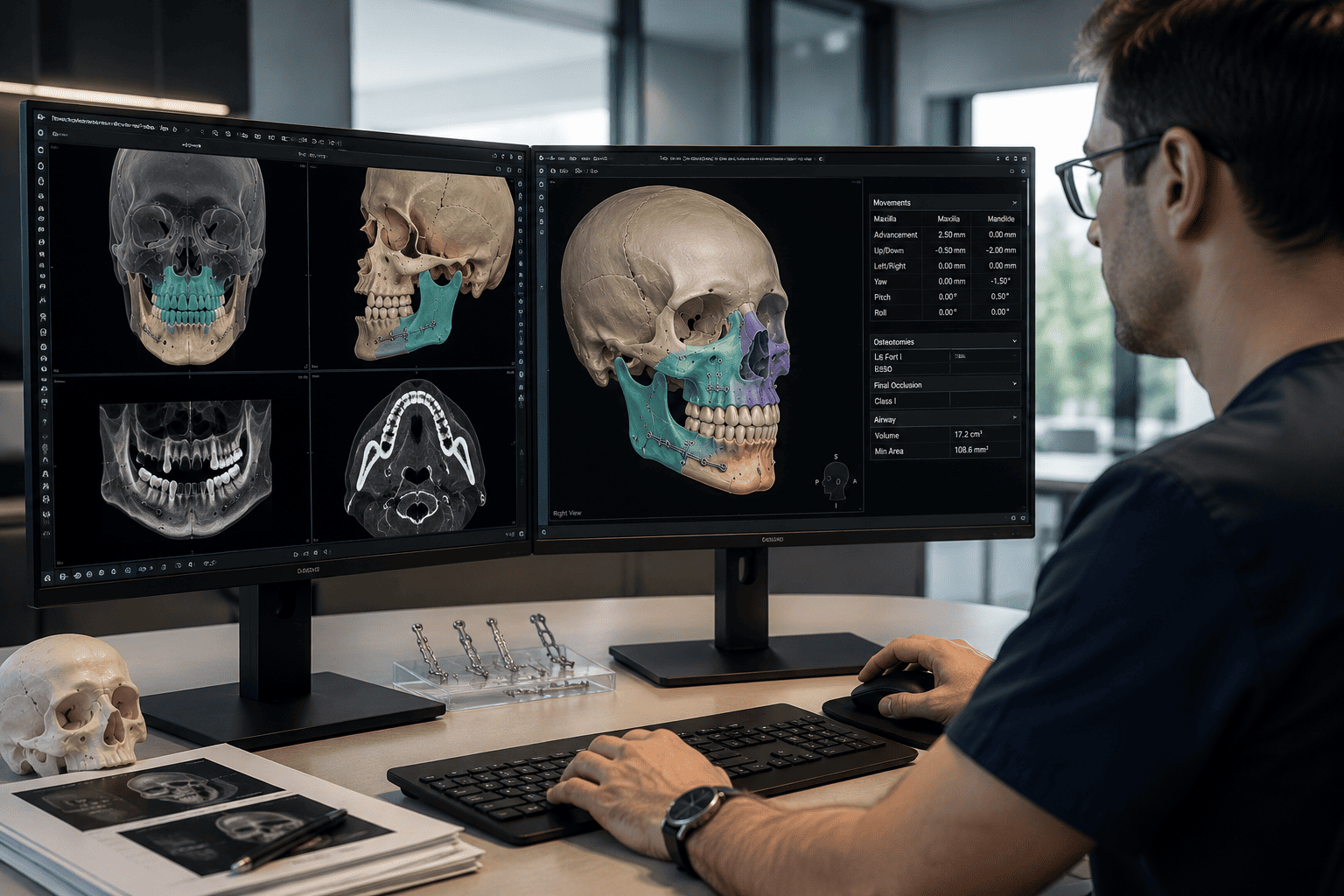
In complex fractures or in sequelae that have already healed, three-dimensional planning helps define the repositioning of the fragments and, where appropriate, the design of specific reconstructions.

Sequelae and follow-up

When an injury is treated incompletely or late, changes in the bite, asymmetries or limited mouth opening may persist. These sequelae are addressed individually and may require reconstructive procedures.

Subsequent follow-up assesses bone healing, masticatory function and the recovery of sensation, which may be gradual.

Frequently asked questions

See all frequently asked questions

Related articles

I am here to help

Your wellbeing begins with a conversation.