
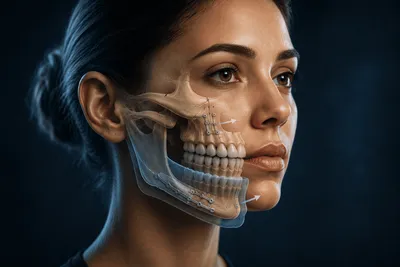
Orthognathic Surgery: What It Is, When It Is Indicated and What Problems It Corrects
Orthognathic surgery corrects skeletal alterations of the maxilla and mandible to improve the bite, function, stability and facial harmony.
Read articleA space for knowledge for patients, colleagues and students. Rigorous information on oral and maxillofacial surgery and health.
Articles and publications
Browse articles, research and publications on oral and maxillofacial surgery, facial reconstruction and other topics related to your health.
View articlesOrthognathic surgery corrects skeletal alterations of the maxilla and mandible to improve the bite, function, stability and facial harmony.
Read article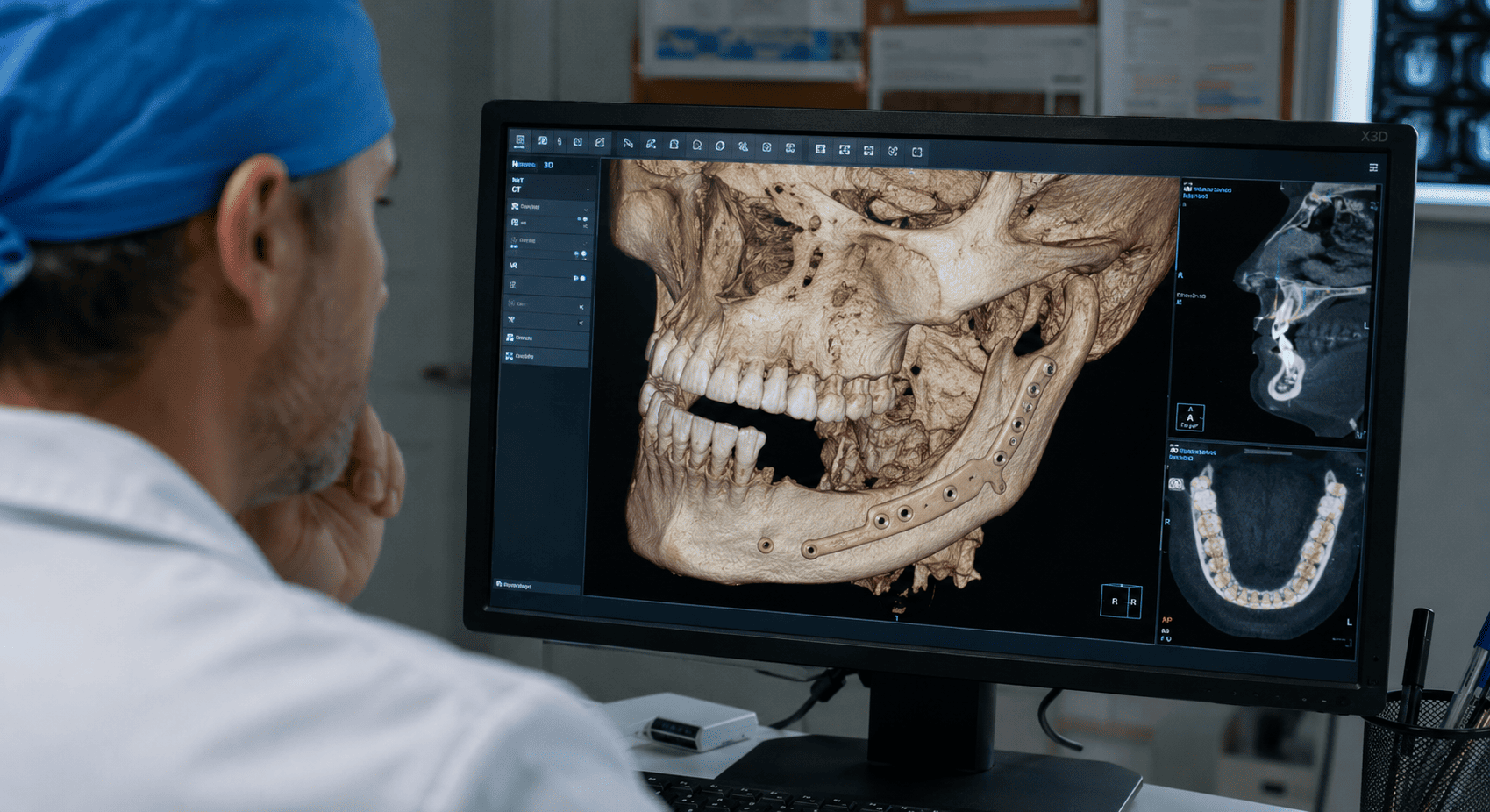
Mandibular reconstruction restores continuity, form and function after complex defects, using microsurgical techniques and 3D planning tailored to each patient.
Read article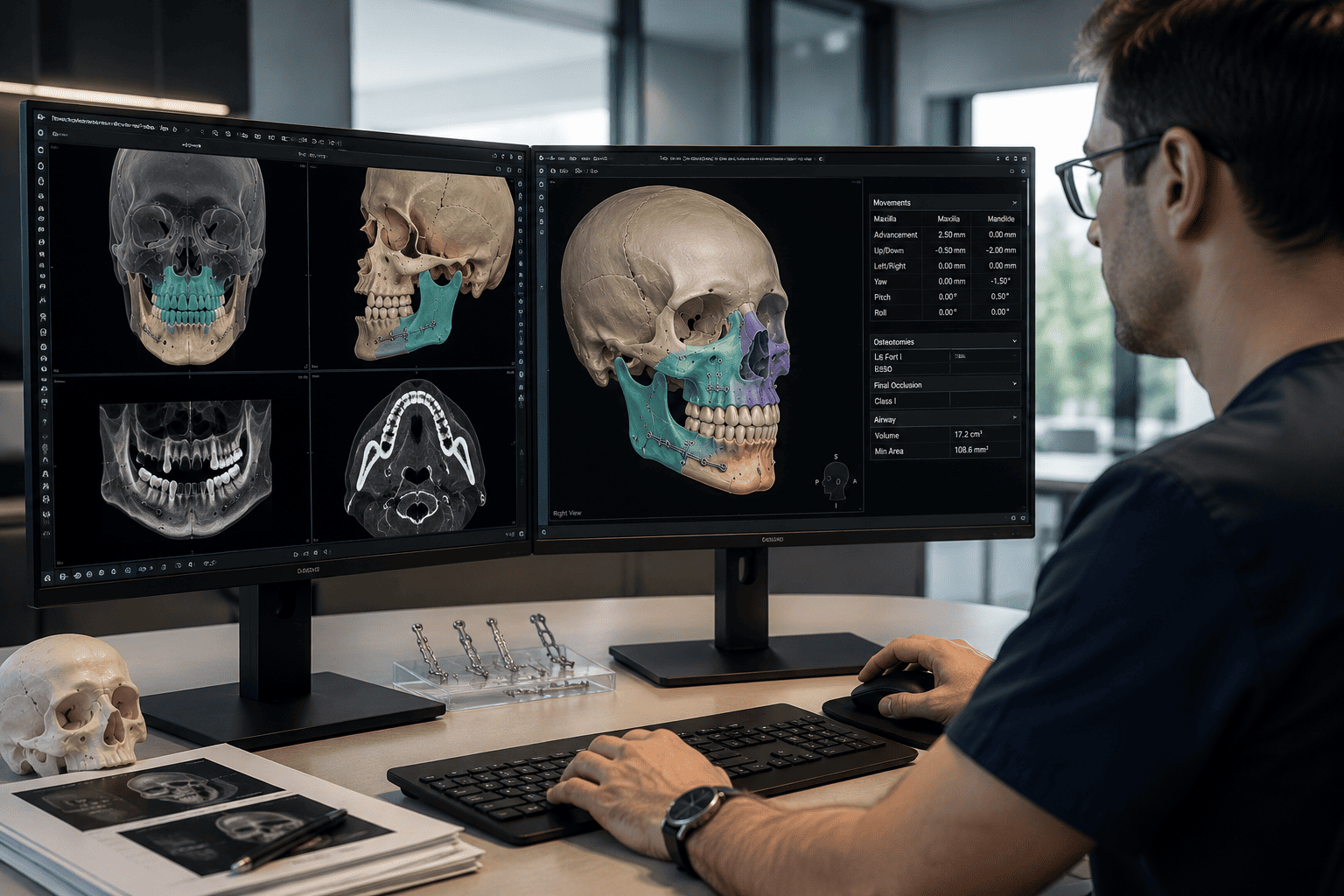
3D virtual planning makes it possible to analyze anatomy, simulate procedures and accurately transfer the plan to the operating room, without replacing the surgeon's judgment.
Read articleEducational videos
A selection of videos in which I explain procedures, technologies and advice for your wellbeing.
 05:04
05:04How digital planning improves precision and outcomes.
Coming soon 07:12
07:12What the procedure involves and its impact on quality of life.
Coming soon 04:36
04:36Postoperative care and recommendations for a successful recovery.
Coming soonFrequently asked questions
Clear, reliable information on procedures, recovery and the care that matters.
See all questionsOrthognathic surgery is the surgical treatment of certain alterations in the position, size or relationship between the maxilla and the mandible. It is mainly indicated when there is a skeletal discrepancy that cannot be adequately corrected with orthodontics alone.
It may be part of the treatment of mandibular prognathism, retrognathia, maxillary excess or deficiency, skeletal open bite, facial asymmetries and other dentofacial deformities. These alterations can affect the bite and chewing, but also facial proportions and, in certain patients, other functions.
The diagnosis must establish which part of the problem corresponds to tooth position and which to the facial skeleton. From there, treatment is planned jointly with orthodontics when indicated.
The goal is not simply to change appearance: the aim is to establish an adequate anatomical and occlusal relationship, while also seeking a balanced facial result.
Orthodontics can move teeth within their bony bases, but it does not significantly change the position of an adult jaw. For this reason, a malocclusion of predominantly dental origin can often be resolved with orthodontics alone, while a significant skeletal discrepancy may require orthognathic surgery.
The decision is based on facial and occlusal examination, photographic records, dental study and imaging tests. Factors analyzed include, among others, the relationship between the maxilla and mandible, the magnitude of the discrepancy, facial symmetry and the real possibilities of orthodontic compensation.
In some patients it is technically possible to camouflage a skeletal discrepancy through dental movements alone. However, the fact that this is possible does not necessarily mean it is the most appropriate option. The biological limits of tooth movement, stability, and functional and facial goals must all be considered.
An altered bite may originate from tooth position, from the relationship between the jaw bones, or from a combination of both components. Distinguishing between them is essential because the treatment differs.
Diagnosis begins with clinical examination of the face and occlusion. Facial proportions, symmetry, the relationship between maxilla and mandible, incisor position and the way the dental arches contact each other are studied. Photographic records, dental models or scans, and radiographic tests complete the analysis.
In a mainly dental alteration, the bony bases may have a reasonably adequate relationship, with the teeth being responsible for the malocclusion. In a dentofacial deformity, the position or dimensions of the skeleton contribute significantly to the problem.
This distinction determines whether the treatment should be orthodontic, surgical-orthodontic, or require another approach.
In orthognathic surgery it may be necessary to operate on only the maxilla, only the mandible, or both jaws. The choice depends on where the deformity is located and which movements are needed to establish an appropriate facial and occlusal relationship.
Single-jaw surgery acts on one of the jaws. Bimaxillary surgery modifies both the upper jaw and the mandible during the same procedure. This allows three-dimensional control of the relationship between both structures and may be necessary in complex discrepancies, certain asymmetries, or situations in which moving only one jaw would not achieve the intended result.
Bimaxillary surgery is not automatically a "better" option, nor is single-jaw surgery a "minor" procedure from the standpoint of indication. The extent of the surgery should respond to the diagnosis and the specific goals of each patient.
Movements of the maxilla and mandible also change the position and support of the soft tissues that cover them. As a result, orthognathic surgery can produce changes in the profile, chin projection, lip support, the paranasal region, the jawline or facial symmetry, depending on the movements performed.
These changes should not be analyzed independently from functional correction. During planning, occlusion, the skeleton and soft tissues are studied together to anticipate how each movement may affect facial balance.
The magnitude and nature of the change differ for each patient. Virtual planning can help study the planned skeletal movements, but the response of the soft tissues shows biological variability, and no simulation should be interpreted as an exact guarantee of the final result.